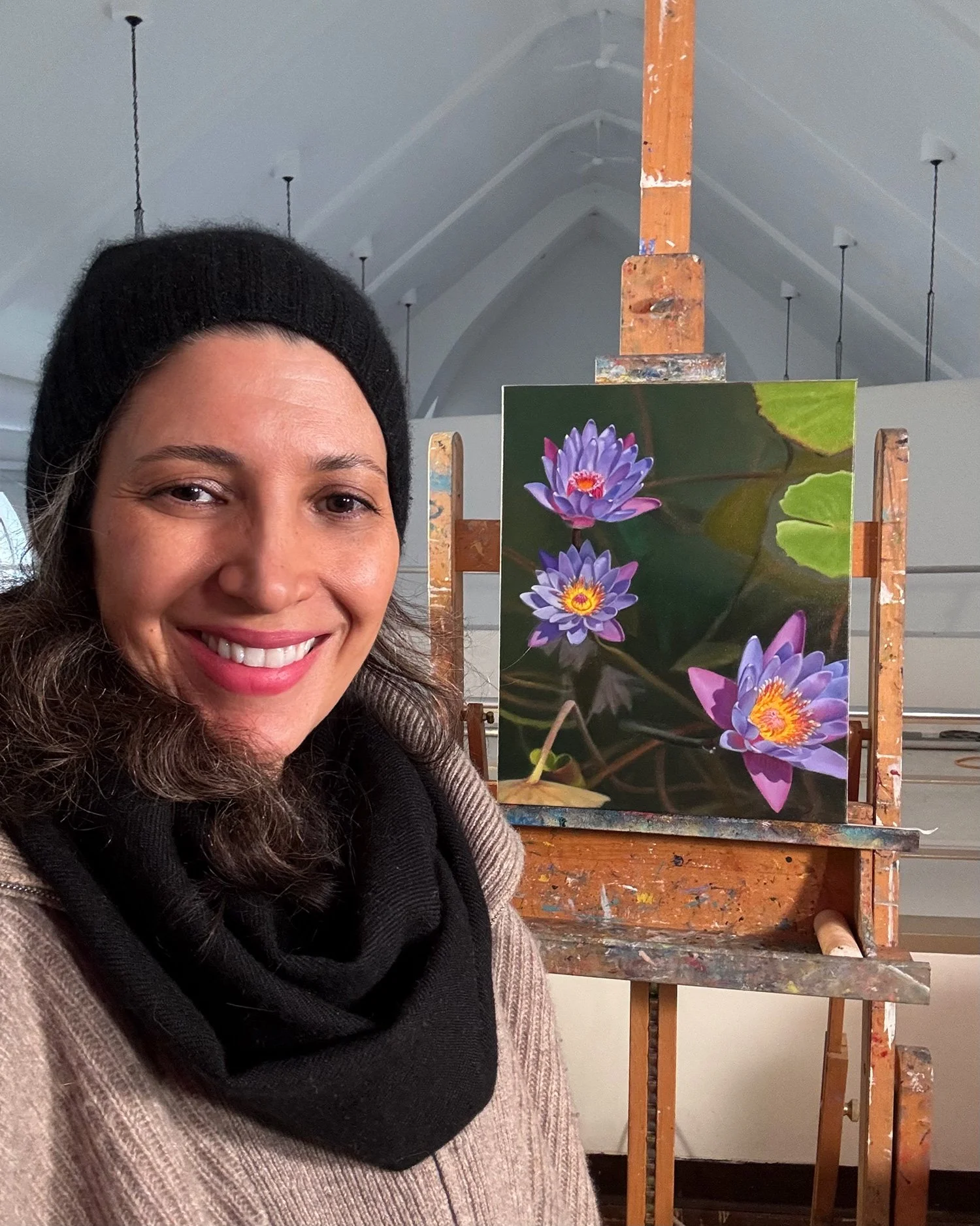
A Water Lily Painting Comes to Life
We often see a finished painting and imagine its creation was smooth and direct.
In reality, most paintings unfold slowly—finding their way through a series of small discoveries (and a lot of staring at the canvas).
This one begins with three photographs.
My commissioner and his wife capture them while visiting a botanical garden on holiday. Each image features a different cluster of water lilies, but one arrangement immediately catches my eye.
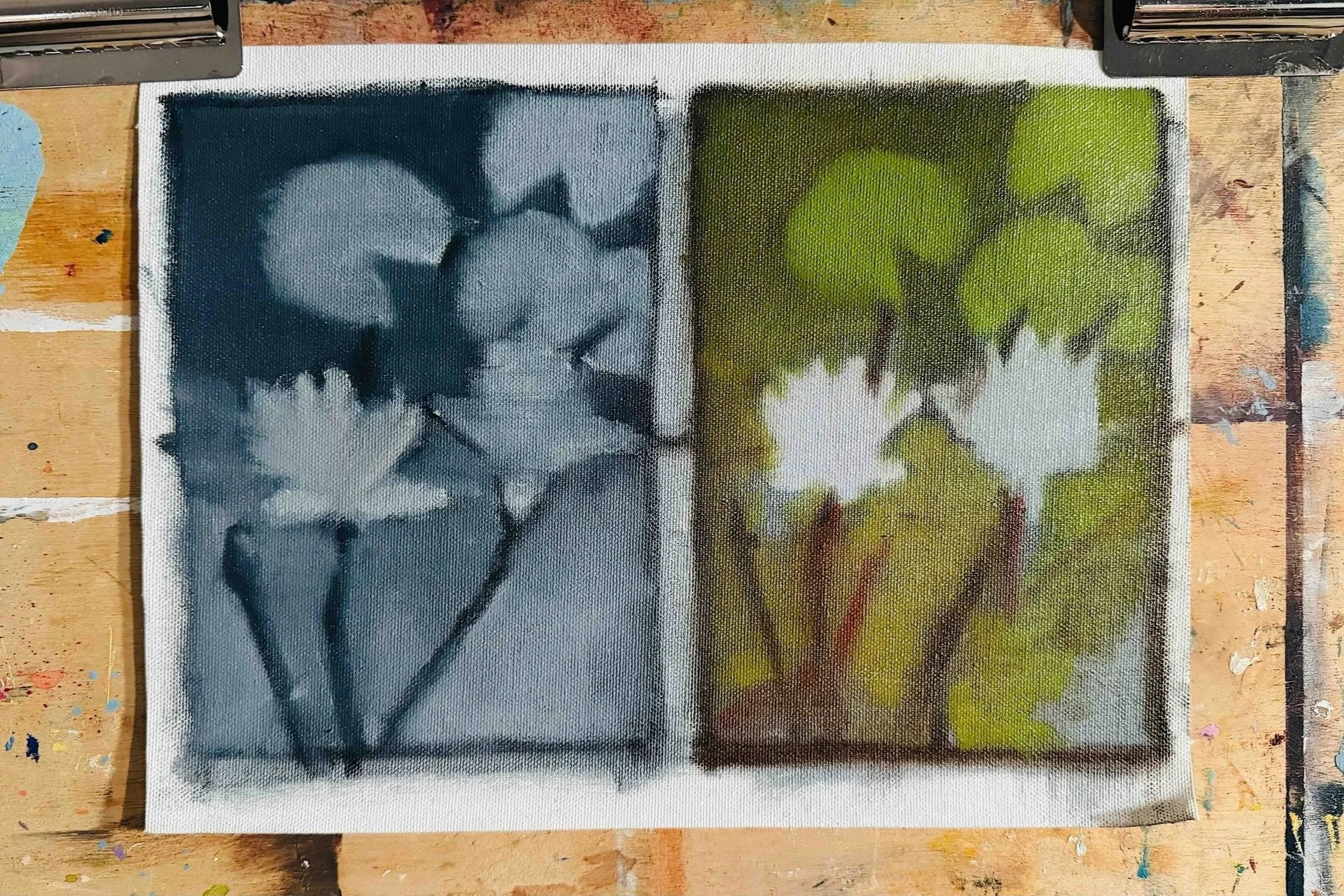
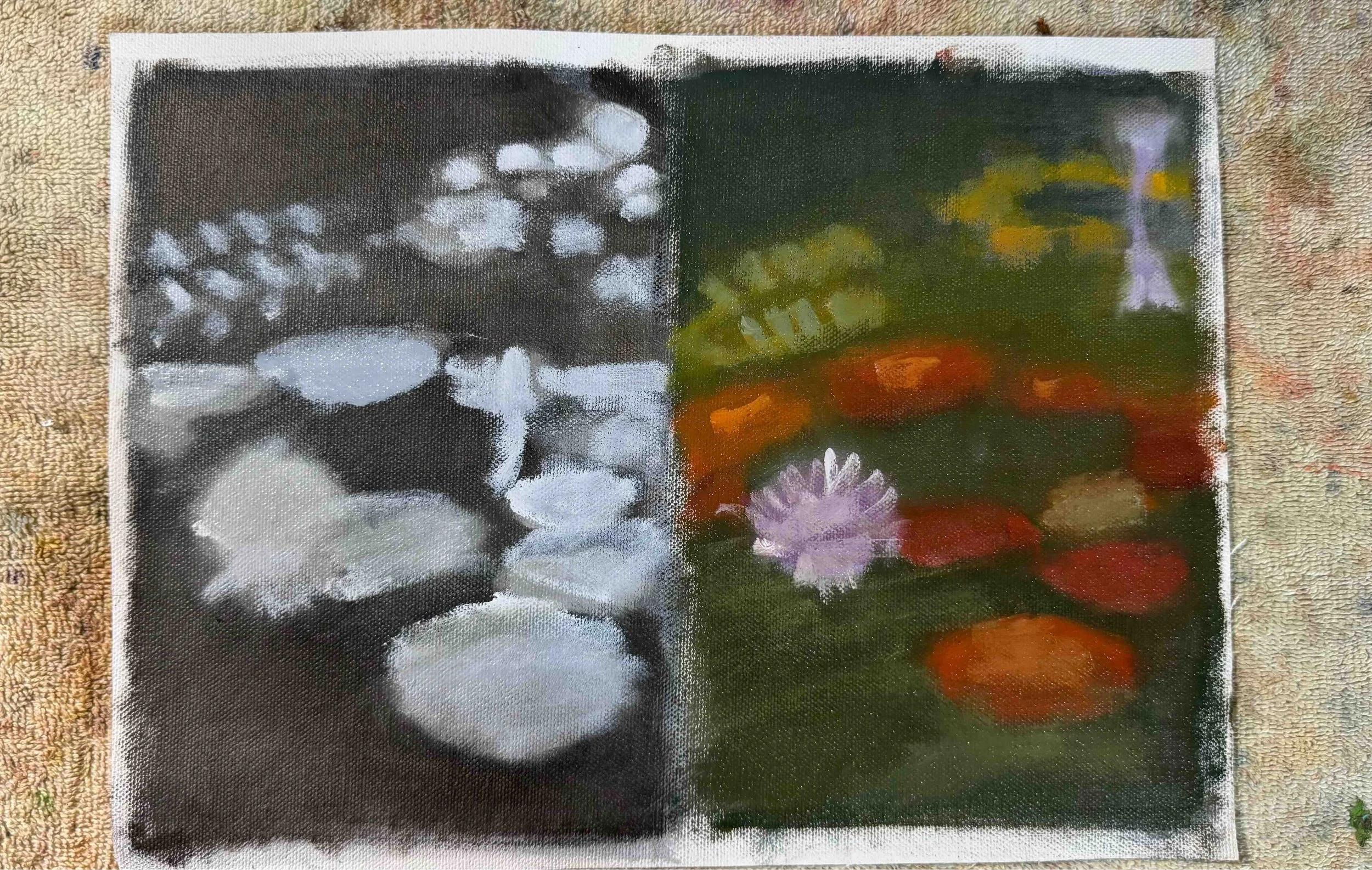
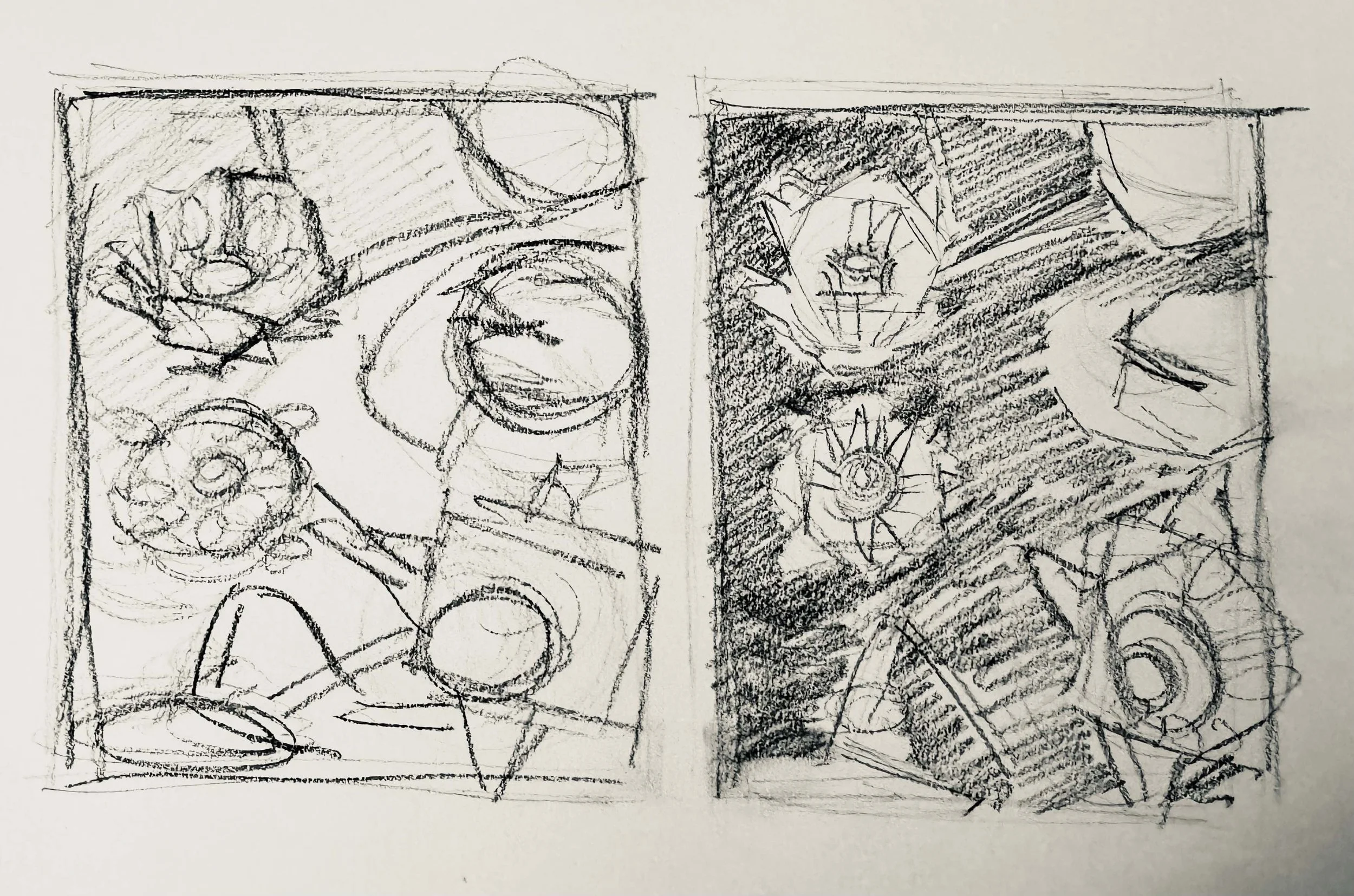
Most of my work starts with quick, unencumbered sketches.
Before paint ever enters the picture, I spend time studying the structure of the subject and the space around it. This is my first chance to understand the rhythm of the forms and where the eye naturally wants to move. At this stage, I’m thinking in broad strokes, looking for composition and balance.
Once the source image is chosen and the tone and color studies are complete, I move into the block-in.
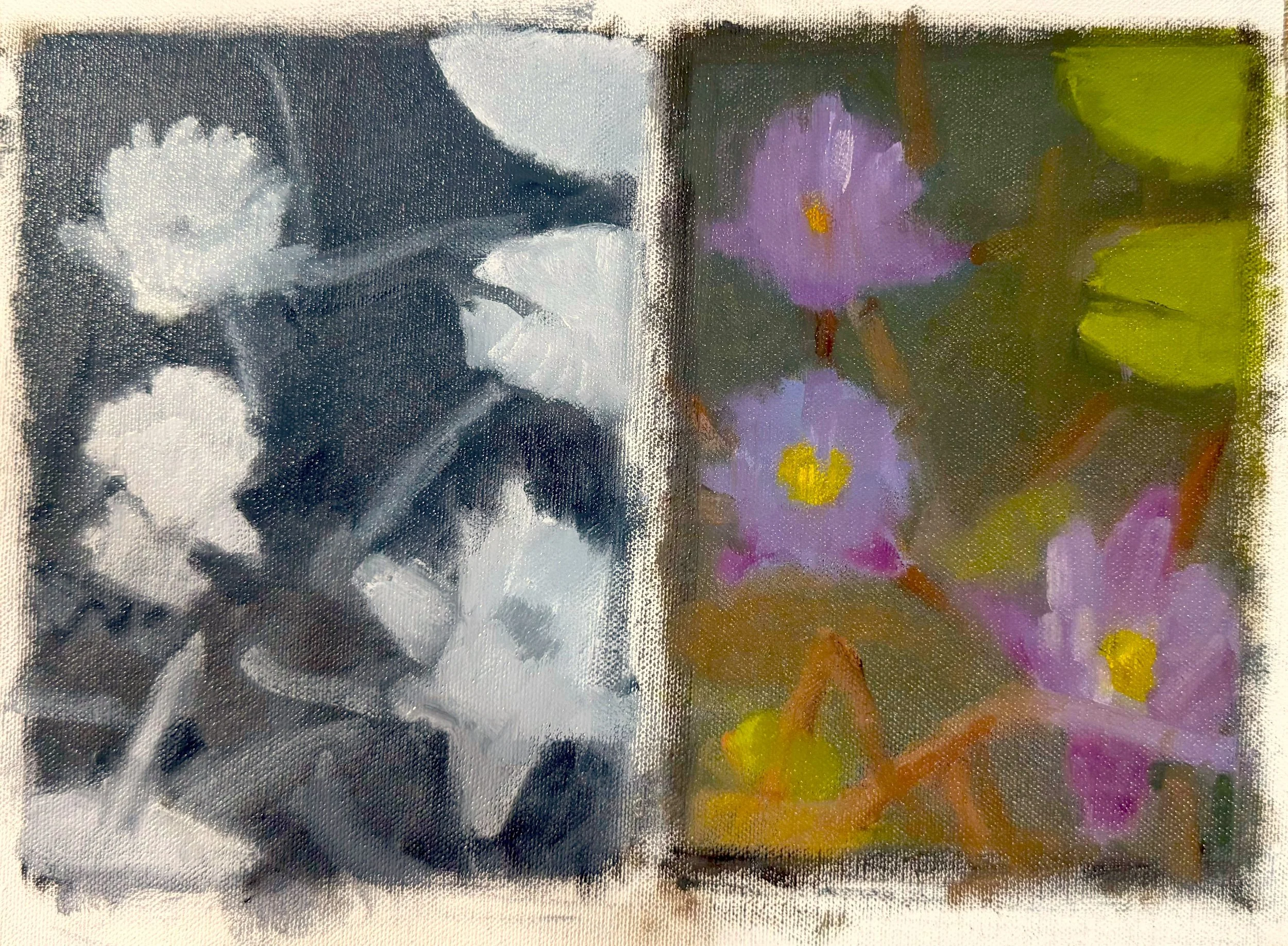
When paint first touches the canvas, everything feels expressive and free. Detail is still far away.
For now, the painting is made up of big shapes and big questions.
I watch the larger relationships—how light and shadow move across the forms, how the elements begin to fit together, how the atmosphere starts to emerge.
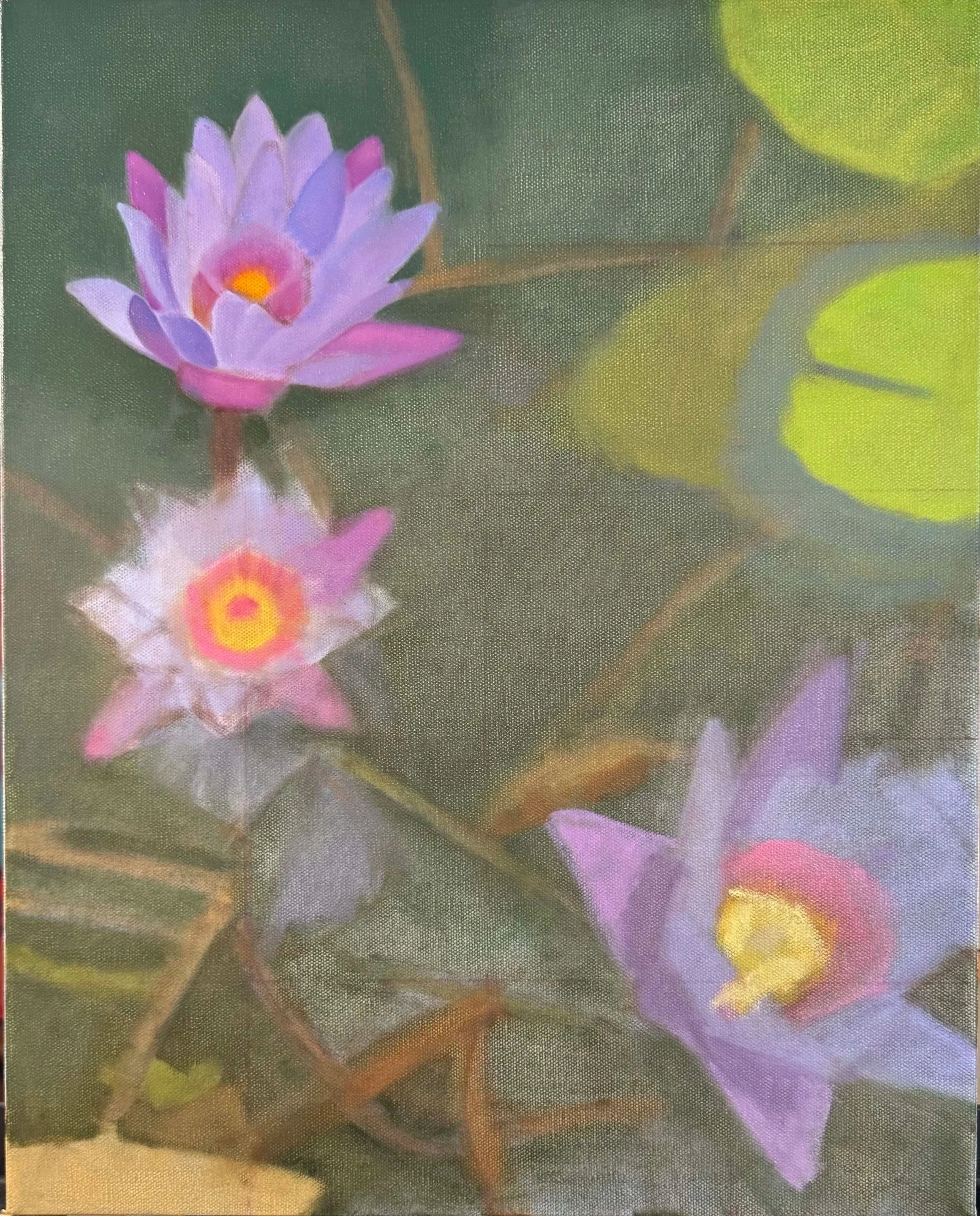
Oil paint is patient.
It allows for this kind of gradual evolution. In classical painting, this approach is called the indirect method, where layers are developed, adjusted, and deepened over time—sometimes over weeks, months, or even years.
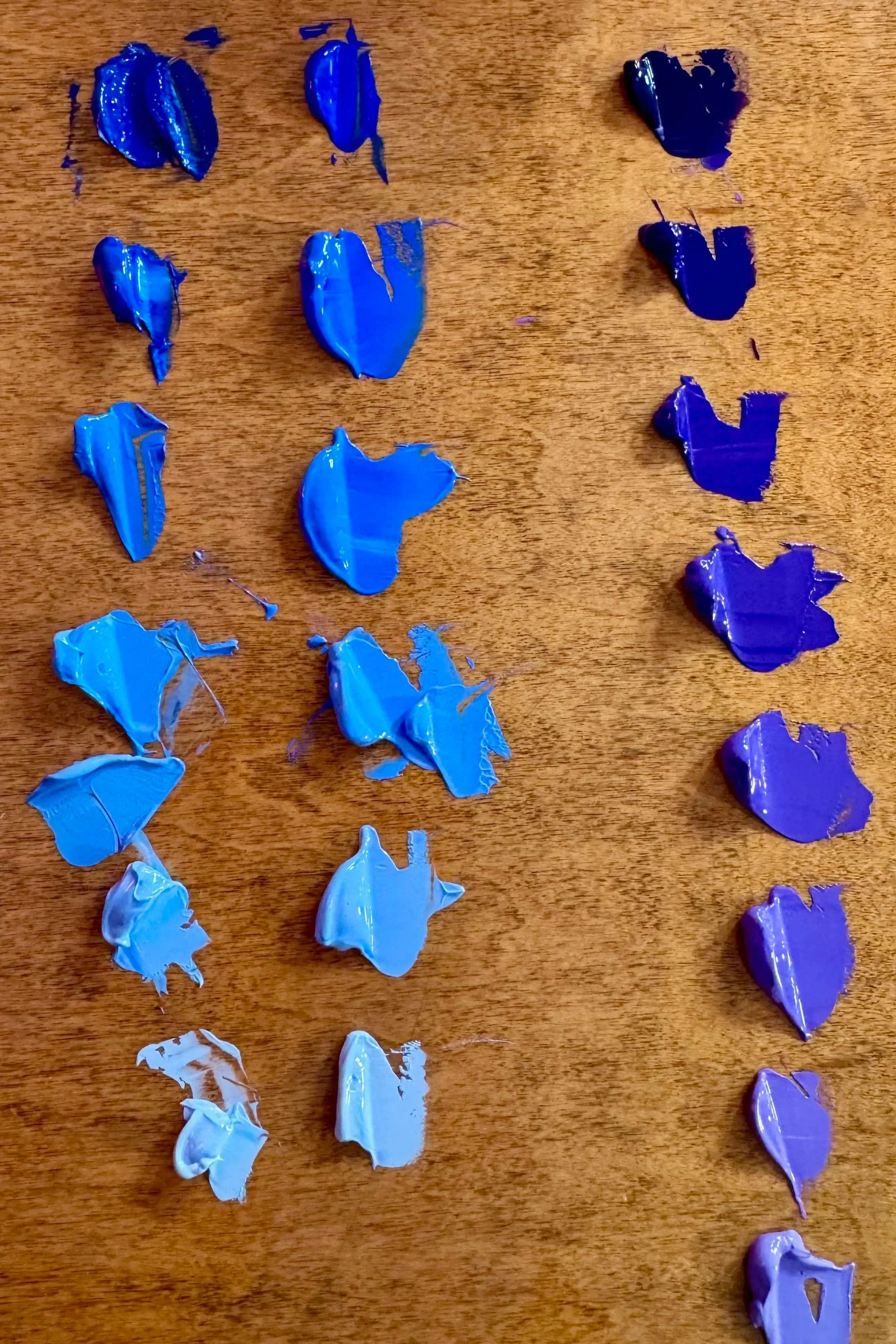
I work from a limited palette of around ten colors. Occasionally, a subject calls for pigments that can’t be mixed within it.
Here, phthalo blues and dioxazine purples make a welcome appearance.
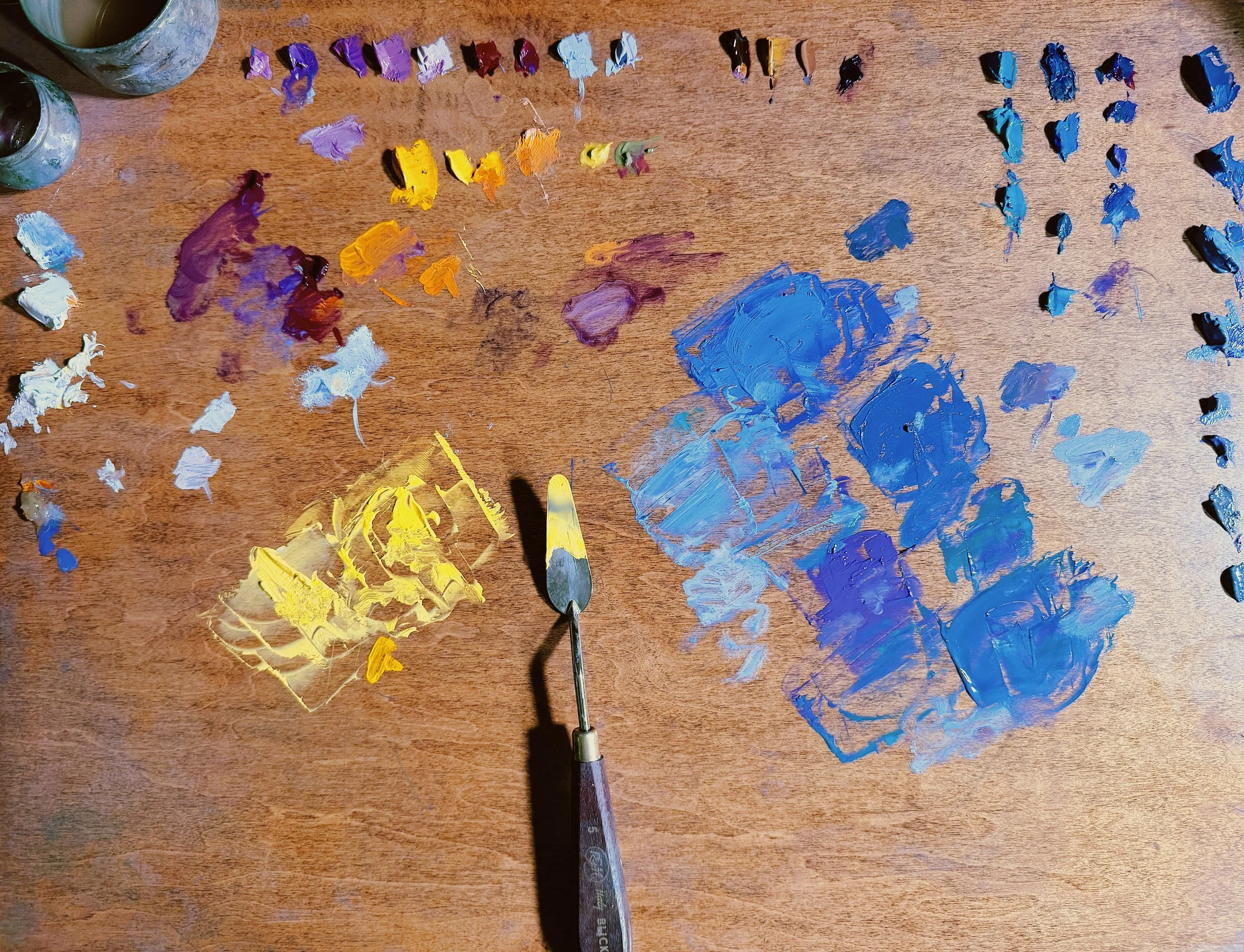
Every painting has a turning point.
Somewhere in the middle, something shifts. The work begins to feel less like something being constructed and more like something being discovered.
It’s as if the painting itself begins to breathe. These are the most alive days in the studio.
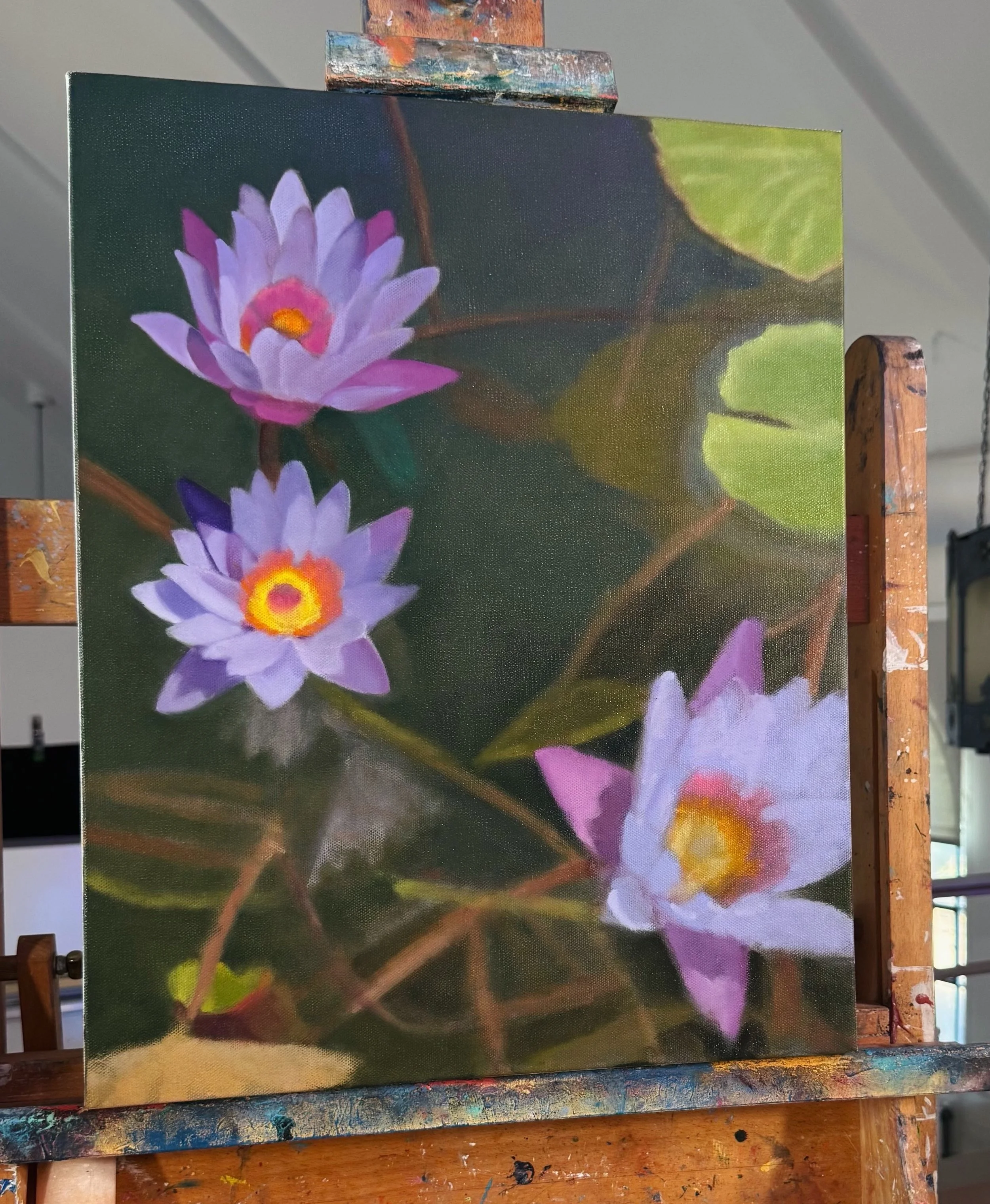
The final stages are where the painting settles in.
The pace slows. Time stretches. The changes become smaller, more deliberate. Every inch of the canvas can feel like a mile.
A softened edge here. A slight tonal shift there.
Often, it’s these quiet, nearly imperceptible adjustments that bring the painting fully to life.
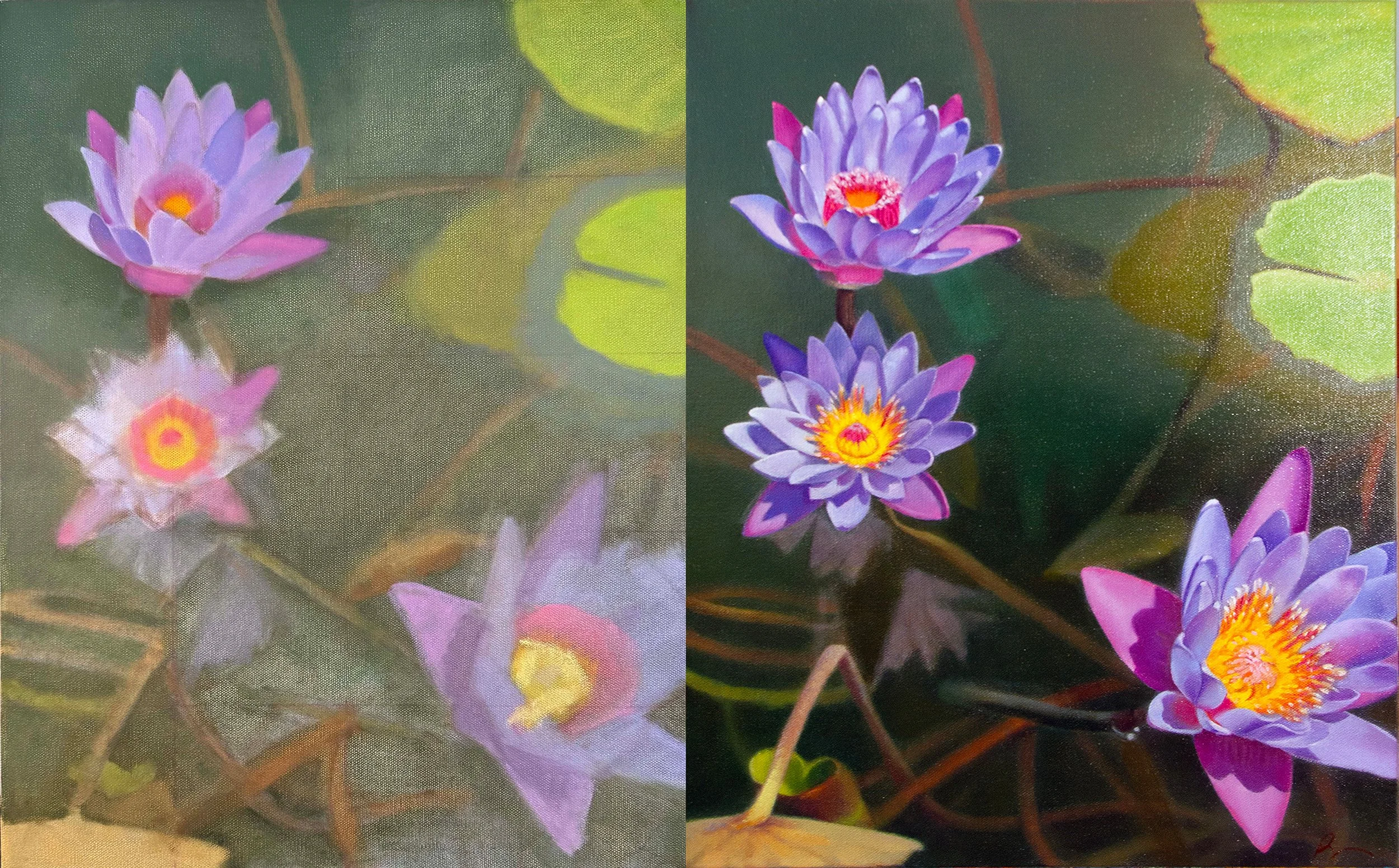
This piece comes together over four months of slow looking, measured decisions, and steady work.
That’s how a painting comes into being—through patience, observation, love, and time.
And I wouldn’t have it any other way.
My clients are thrilled with their commemorative piece—and that, in the end, is the greatest reward.